vietnamese cloud service providers usually provide multiple security measures at the infrastructure level, including access control and monitoring of physical computer rooms, cabinet and power redundancy, as well as ddos protection and firewall policies at the network level. at the same time, enterprises can also refine permissions through virtual private networks (vpns), subnet isolation, access control lists (acls), and role-based access controls (rbac). in order to enhance data protection, it is recommended to enable host and storage-side encryption, and conduct regular vulnerability scanning and patch management to improve the overall security level.
local computer rooms in vietnam can help enterprises achieve data residency and comply with national or industry regulations on data storage locations. for cross-border compliance needs, companies should pay attention to the legal differences between vietnam and target markets, and adopt data partitioning, encrypted storage and access auditing to meet regulatory requirements. in addition, choosing a cloud provider that supports log storage, audit chains, and compliance reporting can effectively prove compliance. connecting with international standards (such as iso 27001) and formulating internal compliance strategies are the keys to meeting complex compliance scenarios.
in terms of physical security, mature cloud vendors have measures such as closed computer rooms, 24/7 guarding, security inspections, and multiple backup power supplies. at the network level, providers are usually equipped with border firewalls, intrusion detection/prevention systems (ids/ips), traffic cleaning centers, and multi-line bgp access to ensure availability and attack resistance. enterprises should configure segmented networks, security group rules and intranet access control, and combine centralized log management with siem systems for real-time alerts, so that they can quickly locate and respond to security incidents when they occur, and meet enterprise-level sla requirements.
priority is given to cloud service providers with international and local certifications, such as iso 27001 (information security management), iso 22301 (business continuity), pci dss (payment card industry), as well as local compliance certificates or government licenses. certificates can prove that suppliers meet certain standards in information security management, risk assessment and emergency plans. enterprises should also review audit reports (such as soc 2) and third-party penetration testing results to confirm whether the scope and service levels covered by the certificate match their compliance needs.
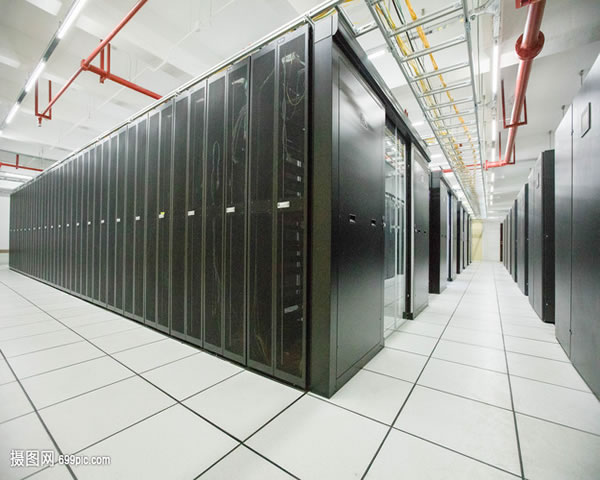
when selecting a vendor, evaluate its security capabilities (encryption, access control, backup, monitoring), compliance qualifications (certificates and audit reports), as well as local support and slas. in terms of implementation, it is recommended to adopt a layered protection strategy: infrastructure reinforcement, network isolation, identity and permission management, data encryption and backup, log concentration and siem analysis, and emergency recovery drills. at the same time, compliance and data governance policies are formulated to clarify data classification, cross-border transfer procedures and contract terms (such as data processing agreements). regular third-party assessments and employee security training are also important to ensure long-term enterprise-level security and compliance requirements are met.
- Latest articles
- Common Misconception Reminder: Issues And Fixes Often Overlooked When US VPS Access Is Slow
- In-depth Analysis Of The Performance Differences Between Free Servers In Korea And Paid Plans
- Enterprises Expanding Markets To Sell Servers To Vietnam With Localized Pricing And After-sales System Setup
- How To Test CN2 Japan Link Quality And Generate Visual Reports
- Illustrated Guide To Setting Up IPs For Singapore Servers, Completing Network Segment Routing And Firewall Configuration
- Key Points For Disaster Recovery Switching And Load Balancing Design For VPS Nodes At The Vietnamese Node In Enterprise-level Architectures
- How To Determine How Much To Rent A VPS In Korea Based On Business Scale And Match Performance Requirements
- Vietnamese CN2 Service Provider: Price And Service Comparison To Help You Choose Quickly
- How Do Enterprises Assess The Time It Takes For Tencent Cloud Singapore Servers To Recover After A Failure?
- Guidance On The Application Of Korean IP Native In SEO And Refined Promotion Operations
- Popular tags
-

How To Find The Best Cloud Server Service In Vietnam
this article will dive into how to find the best cloud server services in vietnam, including price, performance and reliability evaluations. -

Common Misunderstandings About Whether Vietnam Vps Requires Transit
this article will discuss common misunderstandings about whether vps in vietnam requires transit, and help you better understand the use of vps. -

Empirical Analysis Of Vietnam Cloud Server Data Recovery Cost And Recovery Time Target Rto Rpo
based on empirical testing of vietnamese cloud servers, this article analyzes the impact and cost trade-offs of different recovery strategies on recovery time objective (rto) and recovery point objective (rpo), and puts forward practical optimization suggestions and supplier recommendations.